

Smart plugs have become one of the easiest ways to add useful automation to an ordinary home. But if you want more than simply turning appliances on and off, an energy-monitoring smart plug can give you a clearer idea of how much electricity individual devices use.
Instead of guessing which appliance is increasing your electricity bill, an energy-monitoring smart plug can show information such as current power consumption and accumulated energy usage. Depending on the model, you may also get scheduling, remote control, voice control, and smart-home platform integration.
In this guide, we’ve compared five popular options based on features, connectivity, energy-monitoring capabilities, smart-home compatibility, and overall usefulness.
Affiliate Disclosure: Home Gadget Zone may earn a commission when you purchase products through qualifying links. This does not increase the price you pay.
Quick Comparison
| Smart Plug | Energy Monitoring | Connectivity | Best For |
| Meross MSS315 | Yes | Wi-Fi / Matter | Multi-platform homes |
| Shelly Plug S | Yes | Wi-Fi | Home Assistant users |
| TP-Link Tapo P110M | Yes | Wi-Fi / Matter | European/global users |
| TP-Link Kasa KP125M | Yes | Wi-Fi / Matter | Compact energy monitoring |
| Tapo/Kasa Energy Monitoring Plugs | Yes | Wi-Fi | Everyday home use |
5. Meross MSS315 Smart Plug
Best for: Multi-platform smart homes
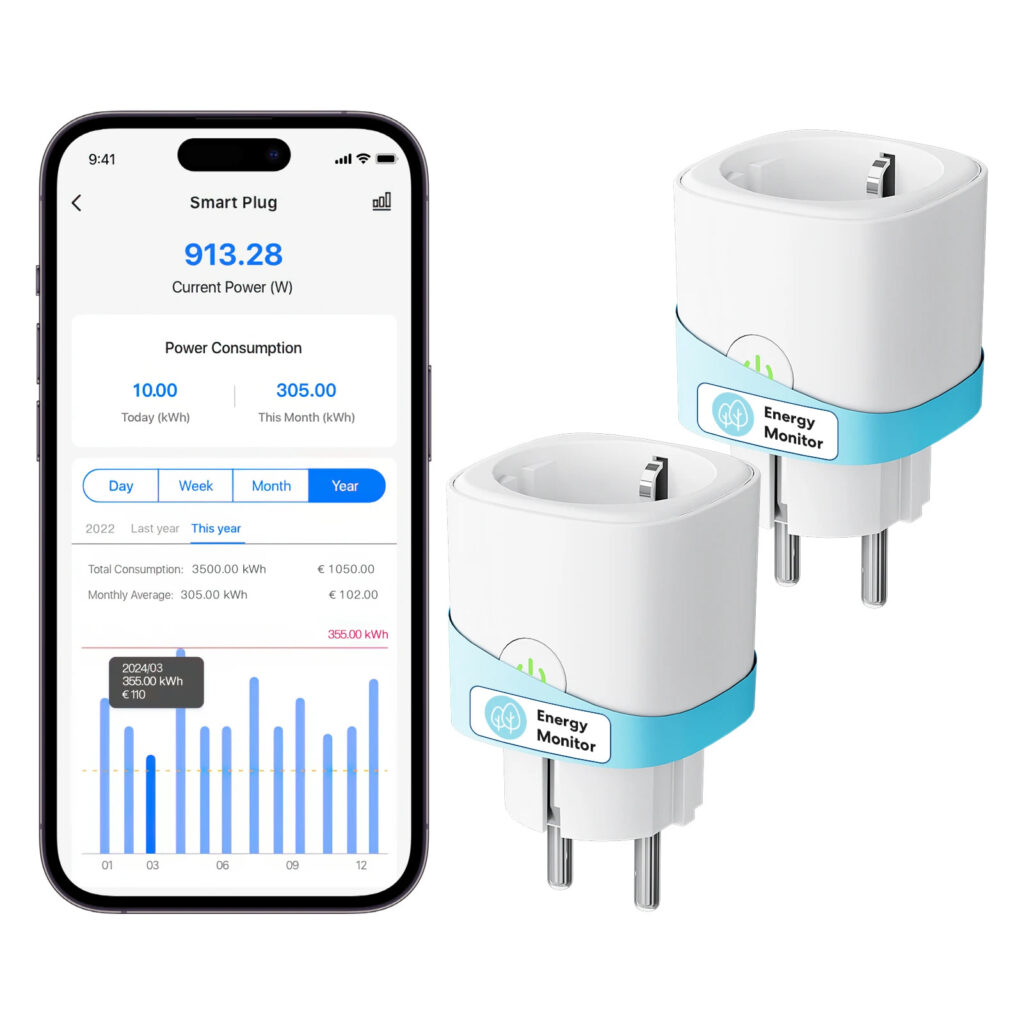
The Meross MSS315 is an energy-monitoring smart plug designed for people who want both smart-home control and electricity usage information.
According to Meross, the MSS315 includes an internal electricity meter that can provide real-time energy reports and historical consumption data through the Meross app. The product also uses Matter for broader smart-home interoperability.
Key features
- Energy monitoring
- Real-time consumption reports
- Historical energy data
- Matter support
- Smart-home integration
- Remote control
- Compact design
Why consider it?
The biggest attraction is its combination of energy monitoring and Matter compatibility. Matter can make it easier to integrate compatible devices across different smart-home ecosystems.
Potential drawback
Matter compatibility does not automatically mean every smart-home feature will work identically across every platform. Always check the supported features of your specific Matter controller before buying.
Best for
The Meross MSS315 is worth considering if you want an energy-monitoring plug that can fit into a broader multi-platform smart-home setup.
4. Shelly Plug S
Best for: Home Assistant enthusiasts
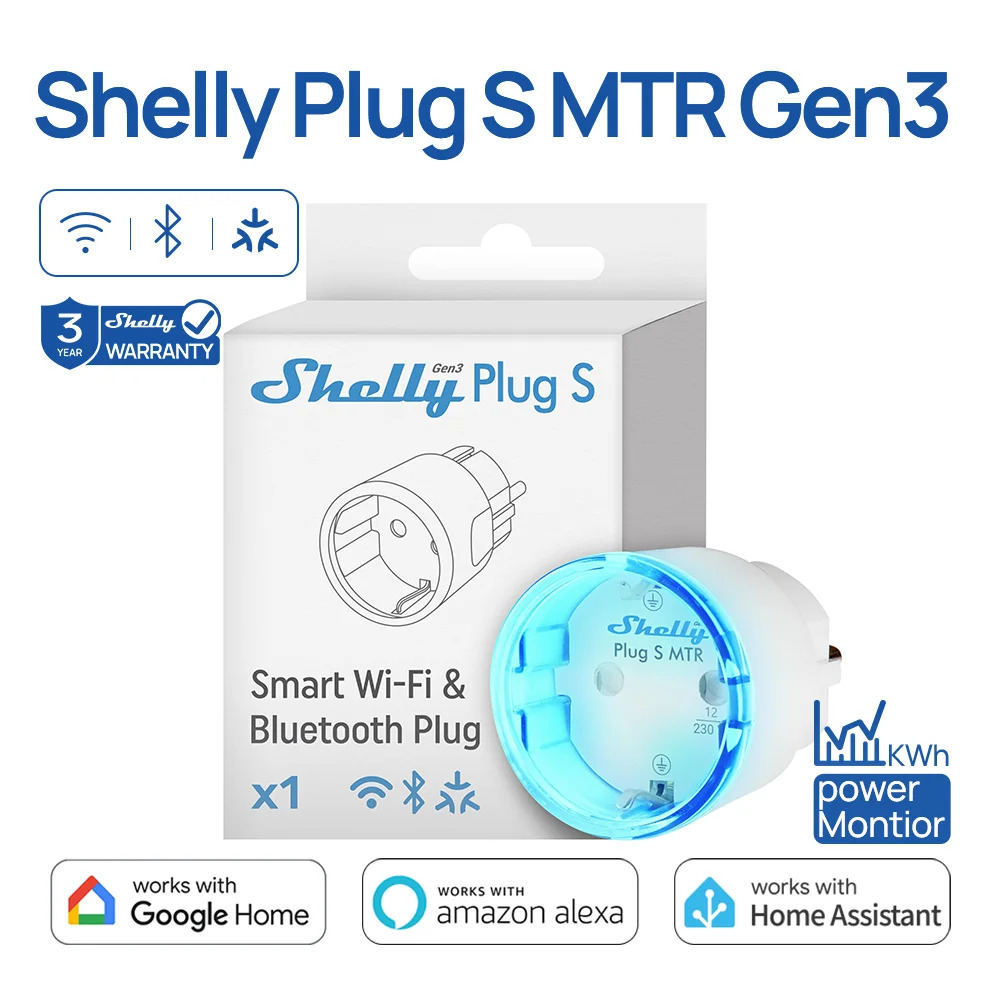
Shelly smart plugs are particularly interesting for people who want more control over their smart-home setup.
The Shelly approach is different from a basic plug that connects to an app. Shelly devices are popular among smart-home enthusiasts because they emphasise local control and integration options.
Key features
- Energy monitoring
- Wi-Fi connectivity
- Smart scheduling
- Smart-home automation
- Home Assistant compatibility
- Compact design
Why consider it?
If you’re building a more advanced smart home, compatibility and local control can matter as much as price.
Home Assistant users may especially appreciate a device that can fit into a larger automation system.
Potential drawback
Shelly products can be more technical than basic plug-and-play smart plugs. If you just want to control a lamp from your phone, you may not need all the extra functionality.
Best for
Choose this type of smart plug if you’re interested in Home Assistant, advanced automation, or local smart-home control.
3. TP-Link Tapo P110M
Best for: Energy monitoring with Matter
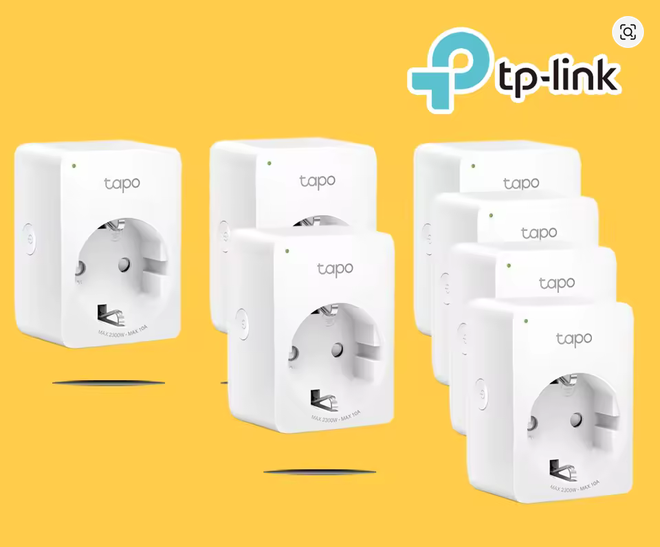
The TP-Link Tapo P110M combines smart-home control with energy monitoring in a compact design.
TP-Link says the P110M can track energy use from connected devices and allows users to enter an electricity rate for bill estimates. It also supports Matter and works with Apple Home, Amazon Alexa, Google Assistant, and Samsung SmartThings.
The P110M uses 2.4GHz Wi-Fi and is rated up to 16A/3680W for general use/resistive loads in the cited regional specification. Product ratings and availability can vary by market, so check the version sold in your country before purchasing.
Key features
- Energy monitoring
- Matter certified
- 2.4GHz Wi-Fi
- Remote control
- Scheduling
- Auto-off
- Away mode
- Voice assistant support
Why consider it?
The compact design is useful if you’re installing several smart plugs around the home.
The energy-monitoring function can also help you understand individual appliance consumption rather than relying only on your monthly electricity bill.
TP-Link added Matter 1.3 energy-monitoring support to the P110M through firmware, allowing compatible Matter-enabled apps to access real-time and historical energy information. TP-Link notes that support varies between Matter platforms.
Potential drawback
Matter functionality can depend on both the device firmware and the Matter controller/app you’re using.
Best for
The Tapo P110M is an interesting choice for users who want energy monitoring plus modern smart-home interoperability.
2. TP-Link Kasa KP125M
Best for: Compact energy monitoring
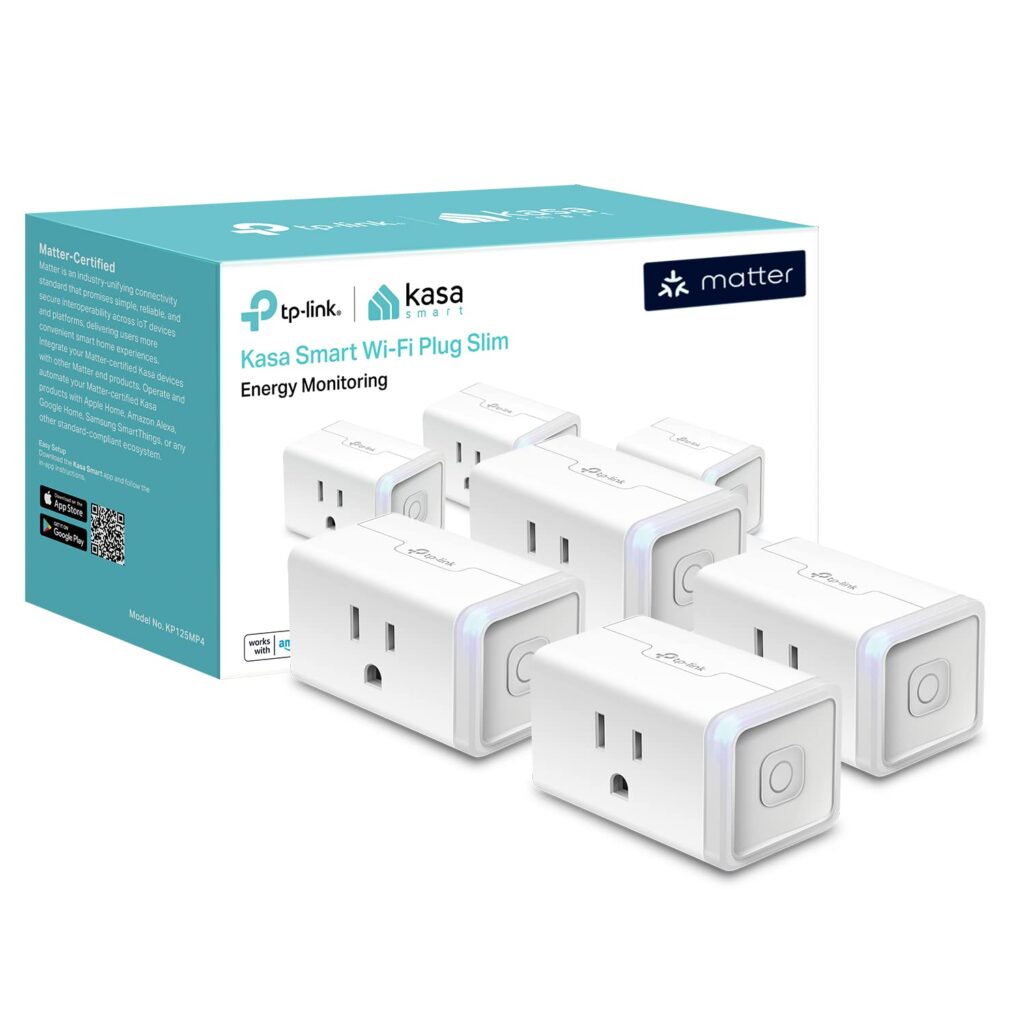
The Kasa KP125M is a compact smart plug with energy monitoring and Matter support.
TP-Link says the KP125M can monitor real-time and historical power consumption, provide remote control and scheduling, and work with voice assistants including Alexa, Apple Siri and Google Assistant.
The US model is rated for up to 15A/1800W for general/resistive loads according to TP-Link’s datasheet.
Key features
- Energy monitoring
- Matter certified
- Compact design
- Remote control
- Scheduling
- Voice control
- Historical energy data
- Kasa app support
Why consider it?
One of the biggest advantages is its small footprint.
A bulky smart plug can block an adjacent outlet, especially on a standard wall socket. The KP125M is specifically designed to reduce that problem.
The energy-monitoring system can also show power usage over time, helping you identify which connected devices consume the most electricity. TP-Link has continued updating the product’s firmware, including Matter 1.3 energy-monitoring support in 2026.
Potential drawback
The exact electrical rating and plug configuration vary by region. Make sure you’re buying the correct regional version.
Best for
This is a strong option to investigate if you want a compact smart plug with energy monitoring and Matter support.
→ Check Price on AliExpress
1. TP-Link Tapo P110M / Kasa Energy-Monitoring Platform
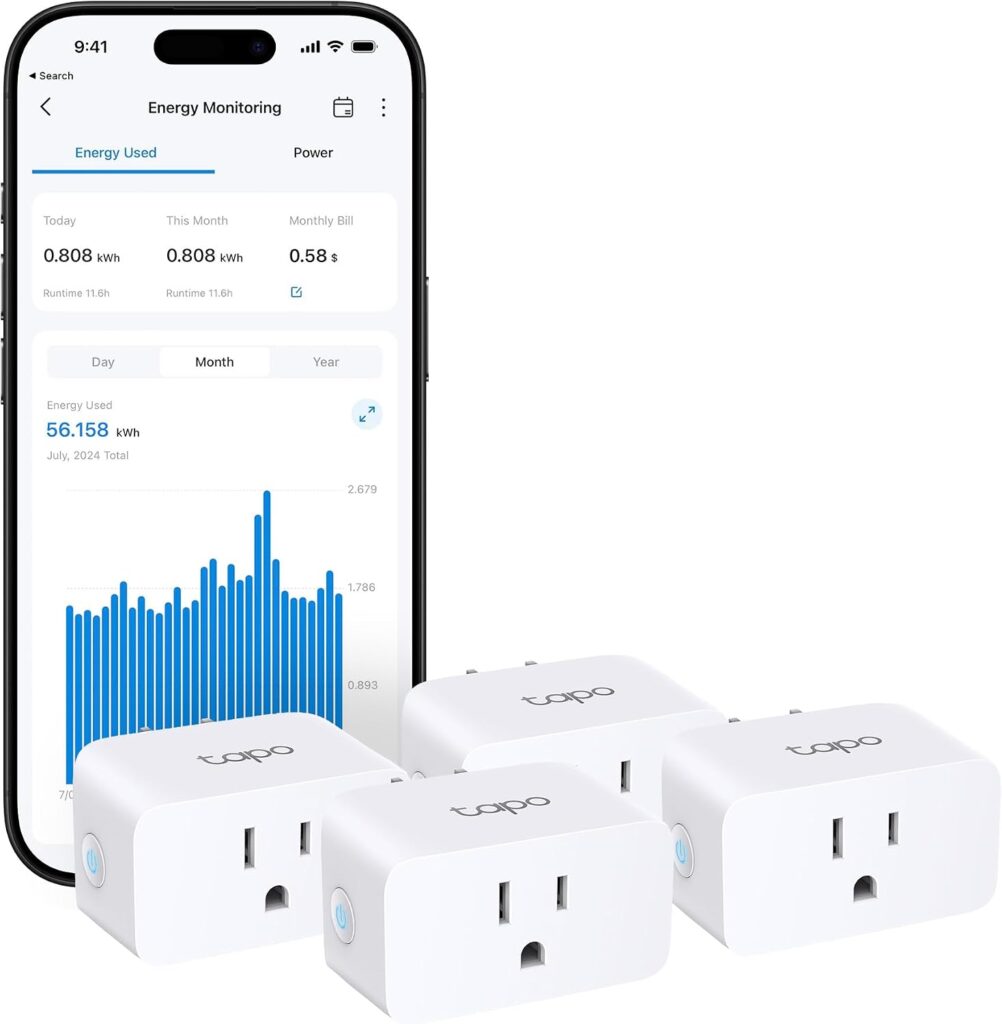
Best for: A practical smart-home energy setup
For homeowners who want to start monitoring electricity consumption without installing a whole-home energy-monitoring system, compact energy-monitoring smart plugs are one of the simplest approaches.
The Tapo P110M and Kasa KP125M demonstrate what to look for: energy monitoring, remote control, scheduling, smart-home integration and compact designs. TP-Link’s current documentation confirms ongoing firmware support for energy-monitoring functionality through Matter 1.3 on compatible models.
What makes an energy-monitoring plug useful?
The most useful feature isn’t simply switching an appliance on or off.
It’s being able to answer questions such as:
- How much electricity does my TV use?
- How much power does my computer consume?
- Is my refrigerator using more electricity than expected?
- How much energy does a particular appliance use over time?
- Which appliances should I investigate further?
By putting a smart plug between the wall outlet and an individual appliance, you can collect device-level consumption information.
What to look for
Before buying an energy-monitoring smart plug, check these five things:
1. Electrical rating
Make sure the plug matches the appliance you’re connecting. Never exceed the manufacturer’s rated load.
2. Energy monitoring
Check whether the device provides real-time power readings, accumulated kWh, historical information, or cost estimates.
3. Smart-home compatibility
Look for compatibility with the ecosystem you already use, such as Alexa, Google Home, Apple Home, SmartThings or Home Assistant.
4. Connectivity
Most affordable smart plugs use Wi-Fi, while some advanced devices use Matter over Wi-Fi, Thread or Zigbee.
5. Regional plug and electrical specifications
This matters most when buying internationally. Plug shape, voltage, frequency and maximum load ratings can differ between markets.
How Much Electricity Can a Smart Plug Save?
A smart plug doesn’t automatically reduce your electricity bill simply because you installed it.
Its main benefit is information and control.
For example, if you find a device consumes significant electricity while idle, you can use scheduling or automation to switch it off when you don’t need it.
Actual savings depend on the appliance, how much electricity it consumes, your electricity tariff, and how you use the smart plug.
Are Energy-Monitoring Smart Plugs Worth It?
For someone interested in understanding individual appliance consumption, they can be a useful addition to a smart home.
They’re particularly interesting for:
- Home offices
- Gaming setups
- Entertainment systems
- Fans
- Lighting
- Small appliances
- Computers
- Chargers
- Appliances with predictable schedules
However, they aren’t a replacement for professional electrical measurement or a whole-home energy-monitoring system when you need comprehensive information about your entire property.
Frequently Asked Questions
What is an energy-monitoring smart plug?
A smart plug that measures electricity consumption from a connected appliance and reports information such as power usage or accumulated energy.
Can a smart plug reduce electricity consumption?
It can help you control when an appliance operates, but the plug itself doesn’t automatically reduce consumption. Savings depend on how you use its monitoring and automation features.
Do smart plugs work without Wi-Fi?
It depends on the model. Some smart plugs rely on Wi-Fi, while others use protocols such as Zigbee or Thread. Check the manufacturer’s specifications before buying.
Can I use a smart plug with a high-power appliance?
Only if the smart plug is specifically rated for that appliance’s electrical load; always check the manufacturer’s maximum load rating and local electrical requirements.
Do I need a smart-home hub?
Not necessarily. Some Wi-Fi smart plugs connect directly to your router, while Zigbee and some Thread/Matter setups may require a compatible hub or controller.
Final Thoughts
Energy-monitoring smart plugs are a relatively simple way to bring more visibility and automation to individual appliances.
When choosing one, don’t focus only on the lowest price. Look at energy-monitoring features, electrical ratings, connectivity, smart-home compatibility, regional specifications and the quality of the accompanying app.
For a modern smart-home setup, Matter compatibility is also worth considering, although the features available through Matter can depend on the controller and app you use. TP-Link’s recent firmware updates show why checking current compatibility information before buying matters.
→ Check Latest Smart Plug Deals on AliExpress